

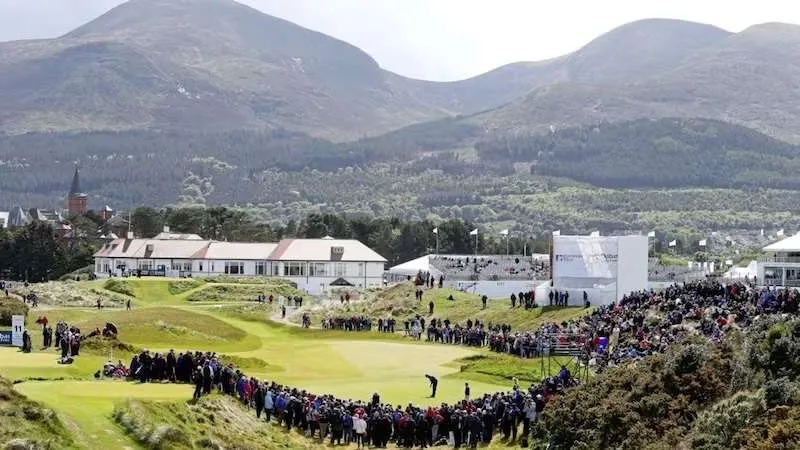
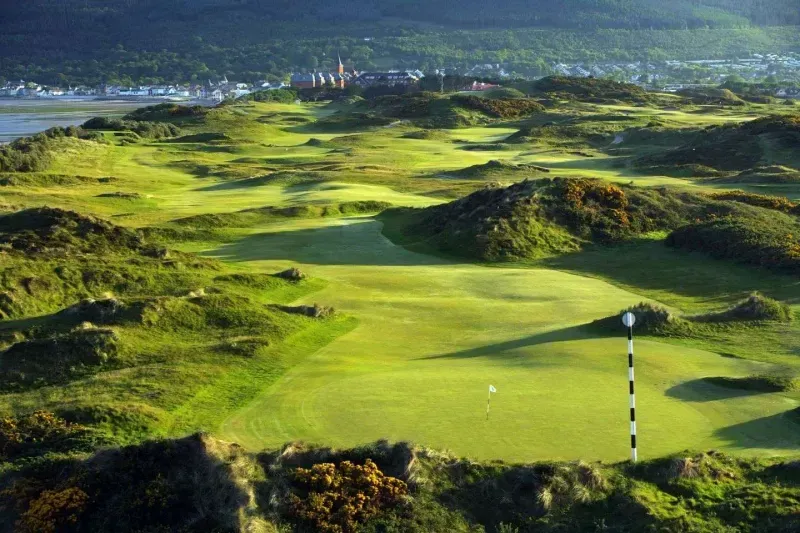
Royal County Down occupies the ground where the Mournes come down to the Irish Sea on the edge of Newcastle. It sits at or near the top of most world rankings, and it is a five-minute drive from our front door. A good share of the people who stay here are here for it.
This is what we tell them before they play.
From the championship tees it is 7,206 yards, par 71. On paper that is modest by tournament standards. Then the wind gets up off the sea and the whole arithmetic changes, which is why scores here run so much higher than visitors expect.
For context: the 2024 Irish Open was won at nine under, the 2015 edition at two under. If that is what tour professionals manage, set your own expectations accordingly and play the round for what it is.
The par threes run from the 144-yard seventh to the 229-yard fourth. The fourth is the one people describe afterwards: a long iron or wood to a green ringed with gorse and ten bunkers, usually into the breeze.
Eight of the fourteen par fours are over 430 yards. The ninth, at 483, is the signature: a blind drive over a ridge, and then you walk up and the whole thing opens out below you, Slieve Donard behind, sea to the right. It is the photograph everyone takes and it deserves it.
The sixteenth works the other way. At 337 yards it tempts long hitters at the green, with five deep pot bunkers and gorse for anyone who gets it slightly wrong.
The par fives are all under 550 and reachable for stronger players, but there are thirty-three pot bunkers across those three holes and the Irish Sea runs down the side of the first fairway. The chances are real. They are not free.
Several tee shots here ask you to hit over a ridge at a fairway you cannot see. If you have never played blind golf, take a caddie. The local knowledge is worth considerably more than the fee, and a caddie who knows which line to take off the ninth will save you more shots than any amount of practice on the range.
The other thing to understand is the gorse. Missing a fairway here is not the recoverable position it is at home. Play to the wide side, take less club off the tee if that is what it needs, and accept a bogey rather than turning it into a seven.
The course started in 1889, when the railway made Newcastle a destination and George Baillie, a Scottish schoolteacher, laid out the first nine. Old Tom Morris extended it to eighteen not long after.
Harry Vardon, J.H. Taylor and James Braid all had a hand in it over the following decades, but two men shaped it most. George Combe, the club's Convenor of the Green, set its early character and helped devise golf's first handicap system. Harry Colt, whose work includes Muirfield and Pine Valley, arrived in the 1920s and gave the course essentially the form it has now. Mackenzie and Ebert have handled recent revisions without disturbing what makes it itself.
Championship golf has been played here since 1893. Tiger Woods, Tom Watson, Rory McIlroy, Arnold Palmer and Jack Nicklaus have all walked it.
Five Irish Opens, most recently September 2024, when Rasmus Hojgaard birdied four of his last five to beat Rory McIlroy by one. Three Senior Opens, the Walker Cup in 2007, the Curtis Cup in 1968, the Amateur Championship twice, the Home Internationals three times, the Ladies' British Open Amateur nine times, and the Irish Open Amateur fifteen times up to 1959.
This is the part that undoes trips. Royal County Down is a private members' club that takes visitors on limited days in limited numbers, and peak summer weekends book close to a year out.
Go to the club directly and check current green fees with them rather than trusting a figure in a blog post. The order that works is: fix the tee time first, then book the beds, then fill in the rest. Doing it the other way round is how groups end up in Newcastle for a week with no golf.
If you are staying with us, our concierge will approach the club and the other Mourne coast courses on your behalf and tell you honestly what is available. We would rather say early that your week is full than let you build a trip around a tee time that does not exist.
Ardglass is half an hour up the coast and played along the cliffs, with one of the best opening stretches in Irish golf. Kilkeel and Warrenpoint are close, good, and a fraction of the championship green fee, which makes them the sensible choice for the day after a long night. Royal Portrush is about two hours north and worth the day if you are building a longer trip.
You walk. Irish links golf is not ridden and buggy availability is limited, so raise it with the club well ahead if that matters to anyone in your group. The dress code is traditional: collared shirt, tailored trousers or shorts with the right socks, no denim. Bring waterproofs whatever the forecast says, and more balls than you think.
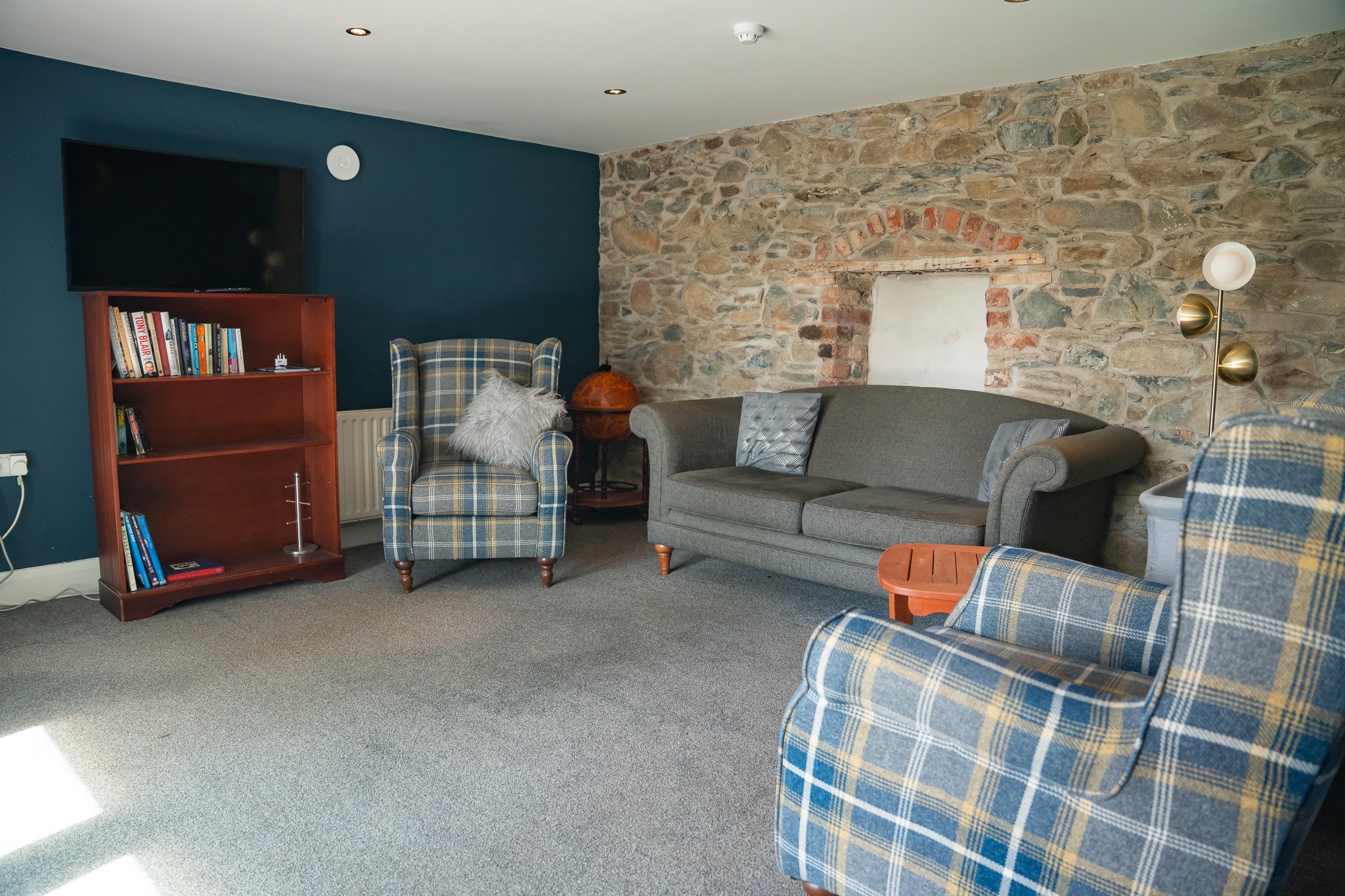
The Briers is five minutes from the first tee. Nine en suite bedrooms sleeping up to twenty-two, so a full golf trip stays under one roof rather than spread across hotels in Belfast.
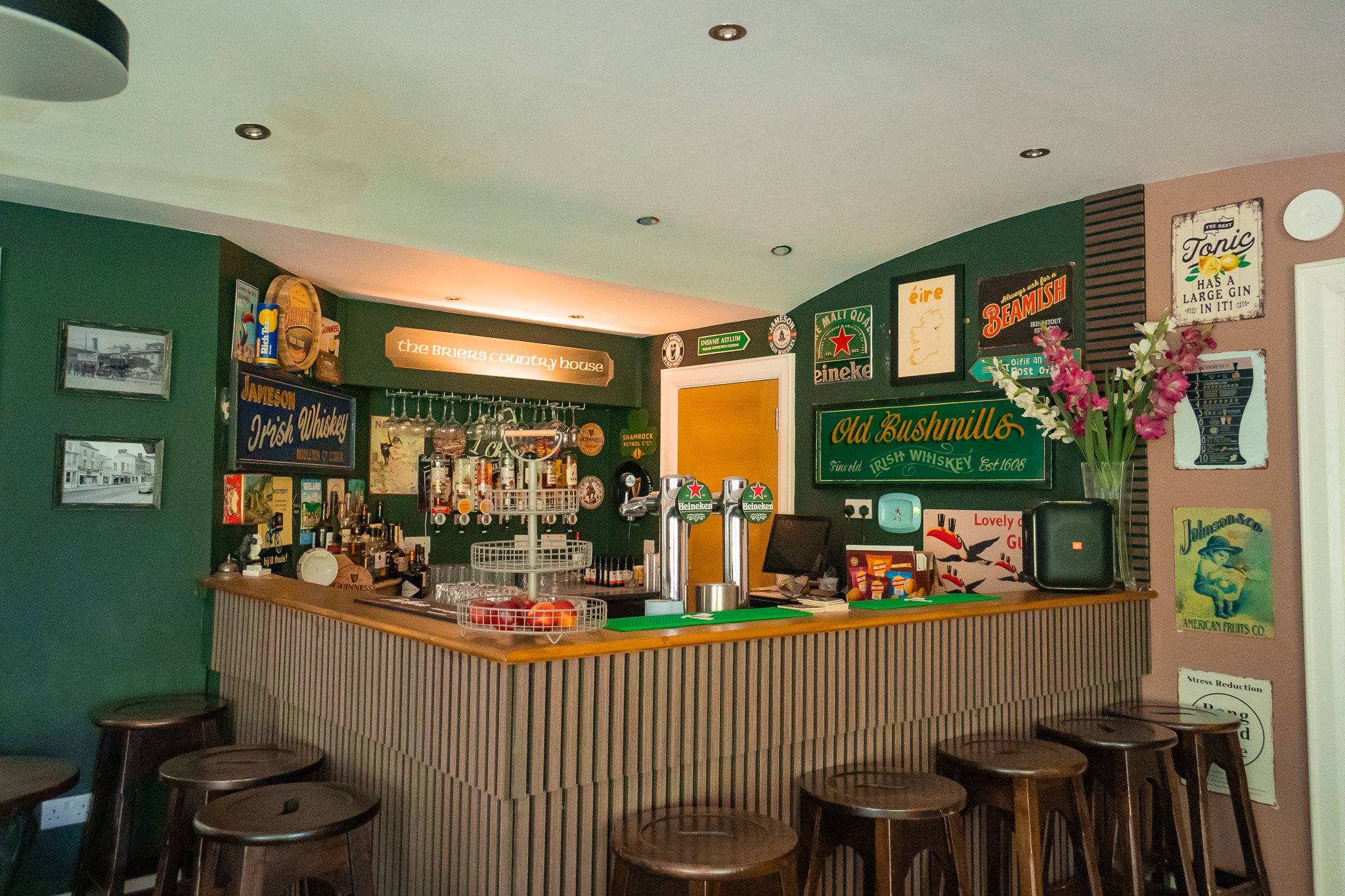
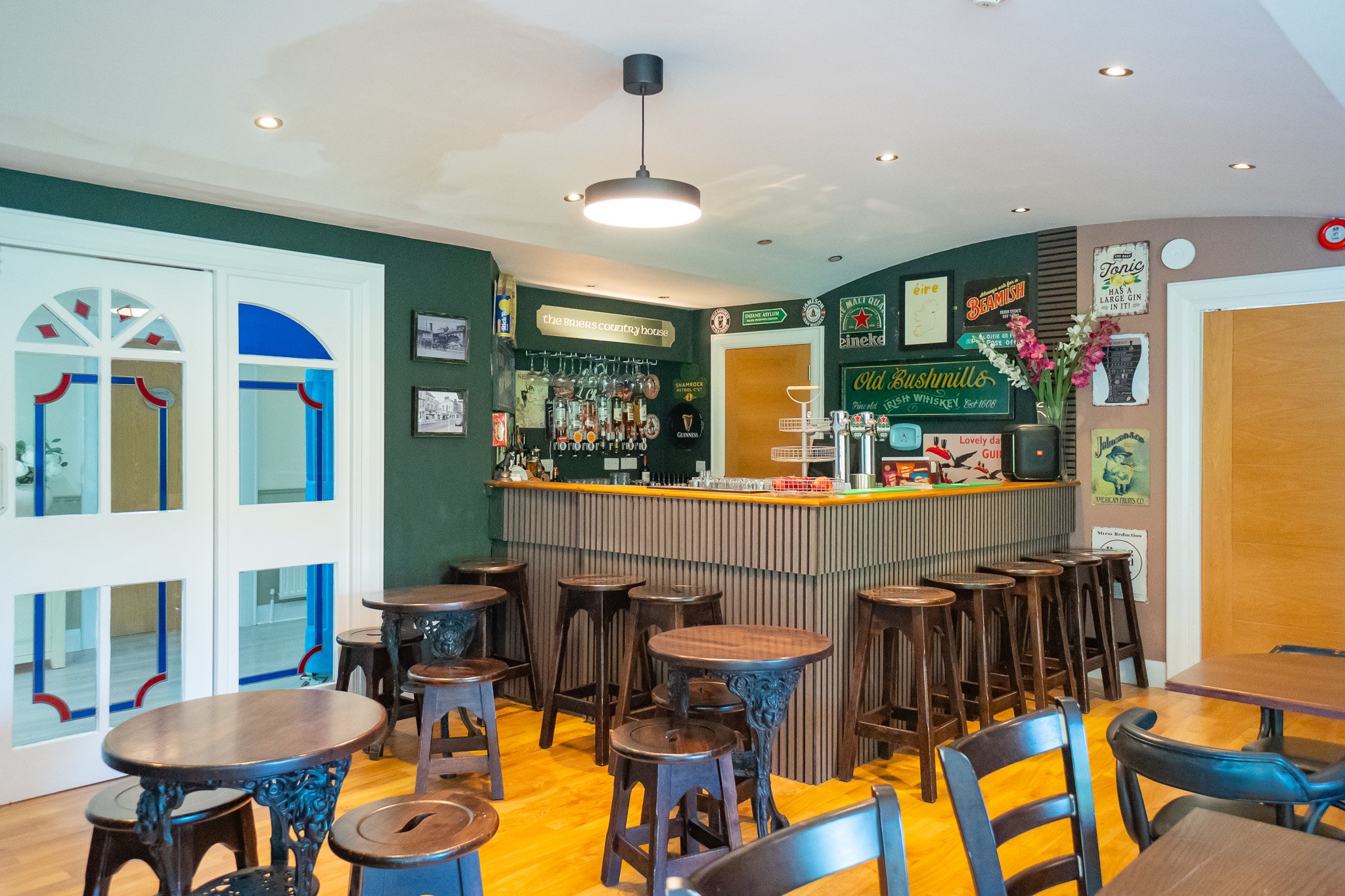
Self check-in runs from 3pm to 8pm with door codes sent on the morning you arrive, which matters when flights land late. Free parking with space for a minibus. Take the whole house and the licensed bar, two hot tubs and a barrel sauna in an acre of grounds come with it, which is a fair way to finish thirty-six holes into the wind.
Whole house £2,000 for a weekend, around £45 per person per night with twenty-two sharing, or £800 a night midweek. Single rooms from £89 Sunday to Thursday.