

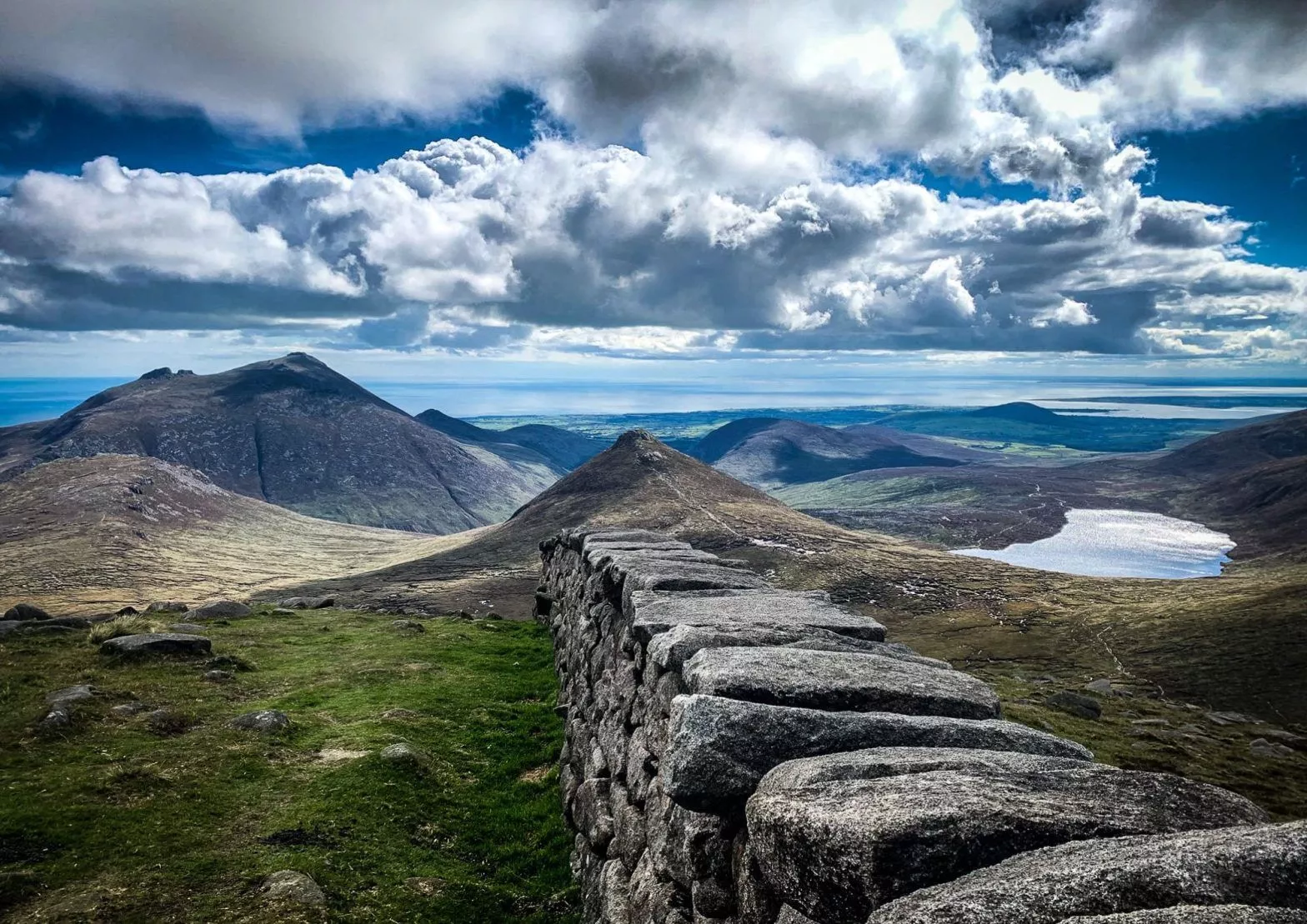
The Mournes are a small range that behaves like a much bigger one. Twelve summits over six hundred metres, packed into an area you can drive across in half an hour, rising almost directly out of the Irish Sea. There is no gradual approach and no foothills to speak of: at Newcastle the mountains start at the edge of the town.
We write this from the Newcastle end, which is the end most visitors arrive at and the end with the highest ground.
Granite. The whole range is built on it, and it shapes everything you see: the rounded summits, the sharp tors breaking through the heather, the boulder fields, and the grey-pink stone in every field wall for miles around. The tors on Slieve Binnian and Slieve Bearnagh are the signature of the range, and they look deliberately placed rather than weathered.
Then there is the Mourne Wall. Built between 1904 and 1922 to enclose the catchment supplying Belfast with water, it runs for twenty-two miles over fifteen summits, a dry stone wall over two metres high in places, carried across ground where carrying anything is hard work. It is the single most impressive man-made thing in the range and it doubles as the most reliable navigation aid in bad weather.
Slieve Donard, at 850 metres, is the highest in Northern Ireland and the one most people climb. The Glen River path starts in Newcastle, a mile from us, and takes four to five hours return.
Slieve Binnian is quieter, more interesting underfoot and arguably the better day, with the Back Castles tors along the summit ridge. Slieve Bearnagh has the most dramatic profile in the range. Slieve Commedagh, Donard's neighbour, is higher than almost everything else and climbed by a fraction as many people.
For something gentler, Silent Valley gives you the scale of the range from the floor of it, on good paths, without a summit involved.
C. S. Lewis grew up in Belfast and spent time in these mountains, and is often quoted as saying that the Mournes made him feel that at any moment a giant might raise his head over the next ridge. The landscape of Narnia is generally traced back here.
The range carries older stories too, of smugglers running goods up from the coast along the Brandy Pad, which is still a walkable route and still called that.
Heather, gorse and rough grass cover the lower slopes, with alpine species higher up and in the gullies. Ravens are common and unmistakable, peregrine falcons breed on the crags, and wheatears arrive in spring. Buzzards work the lower ground. Red squirrels hold on in the forest parks at Tollymore and Castlewellan rather than on the open hill.
This is the part visitors underestimate. The range rises straight from the sea, which means cloud forms on it fast and often, and conditions on the tops can bear no relation to the car park. It can be calm and bright in Newcastle and blowing a gale on Donard ninety minutes later.
Take layers, more water than you think, a map and a compass, and the ability to use both. Check the cloud base rather than just the rainfall. Tell someone your route. The Mournes are not high by international standards and people still get into trouble on them every year, almost always through being under-equipped rather than through being unfit.
Autumn is the best of it: settled conditions, firm ground, the heather over and the crowds gone. Winter is superb if you start early and carry a head torch, because the light goes by four. Spring brings long days and surprisingly dry ground. Summer is busiest, and the midges on still evenings are real.
The Briers is an eighteenth century house at 39 Middle Tollymore Road, Newcastle, at the foot of the range. Tollymore Forest Park is under two kilometres away and the Glen River path up Donard starts about a mile from the door.
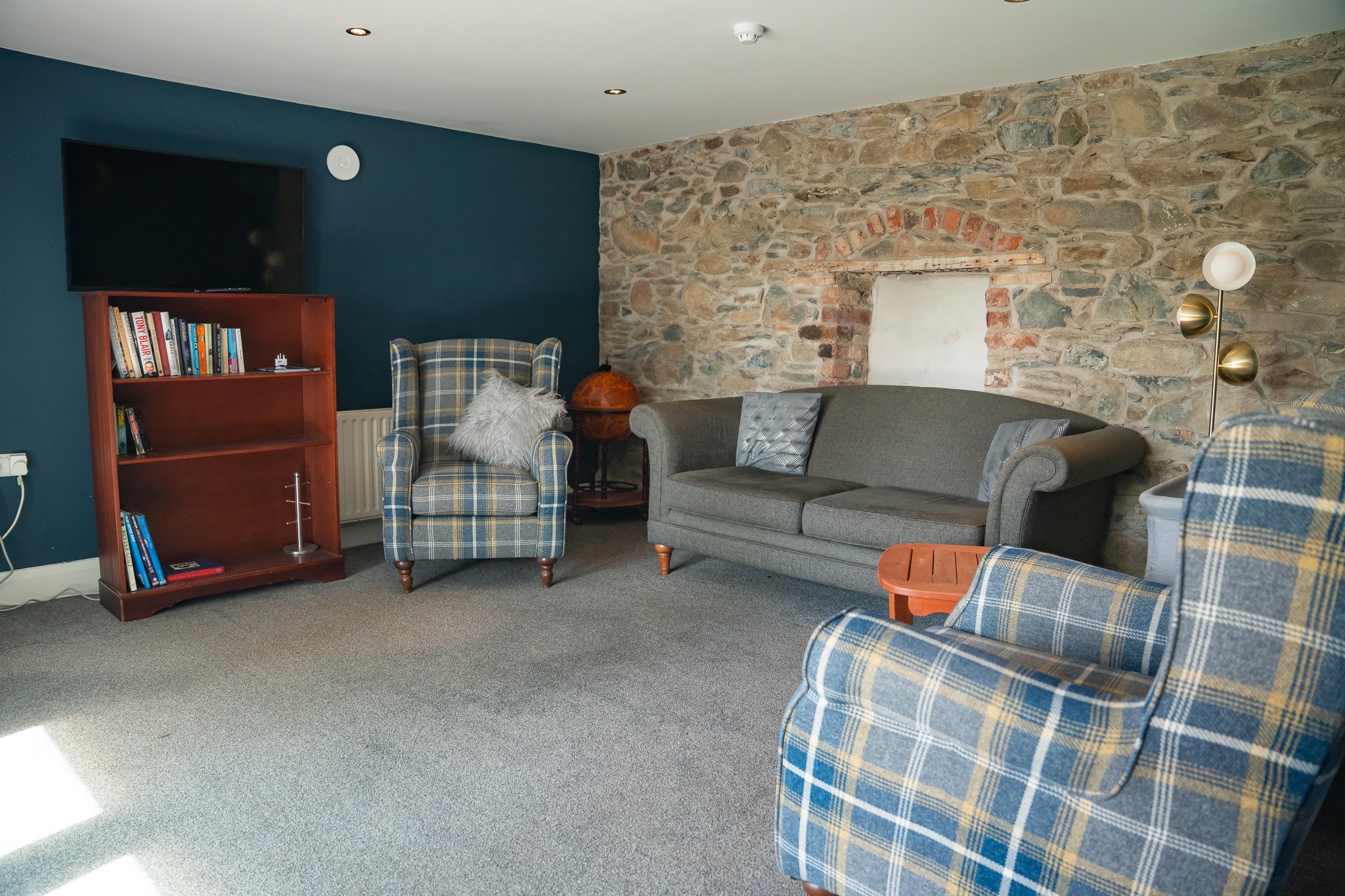
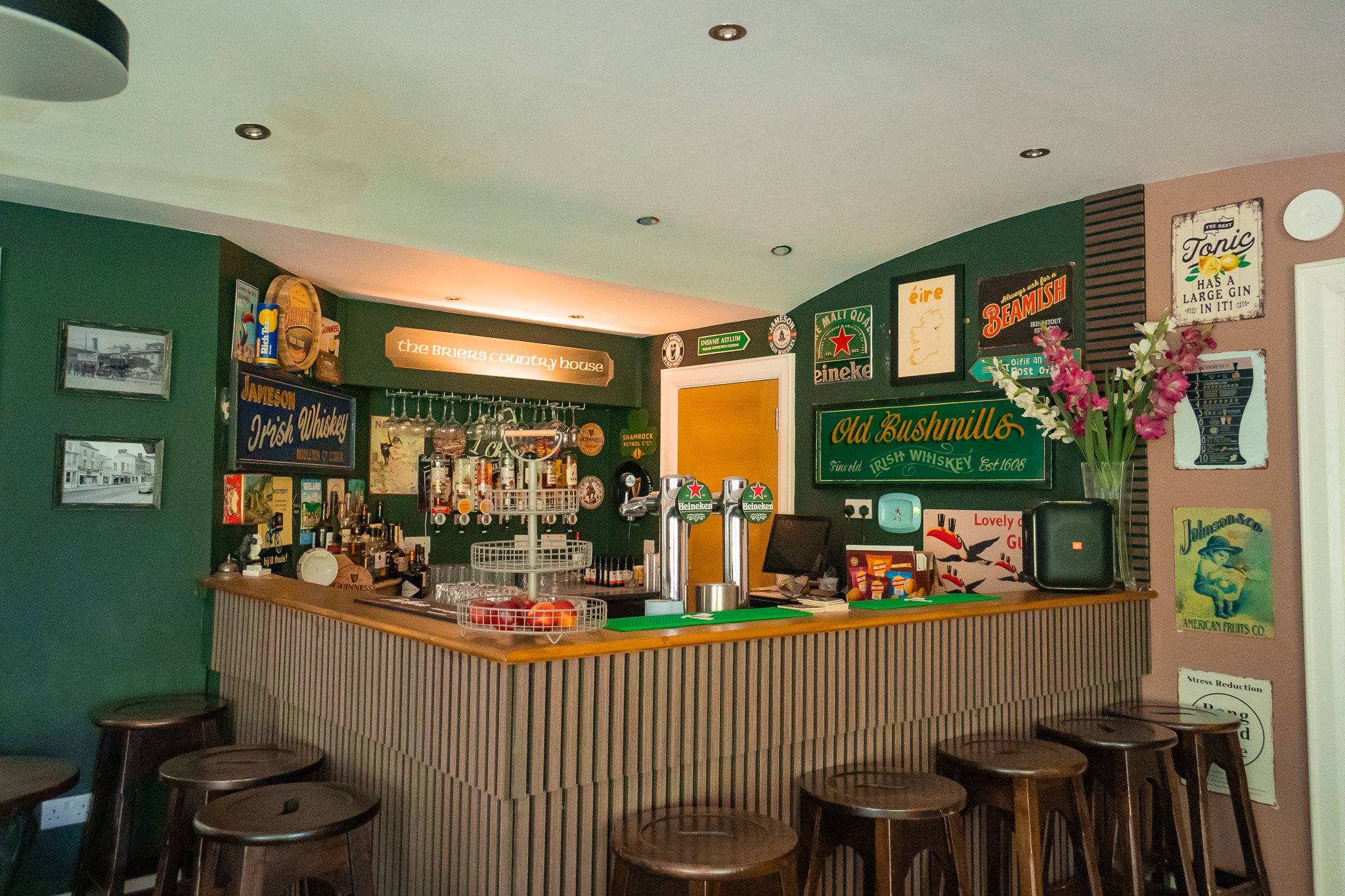
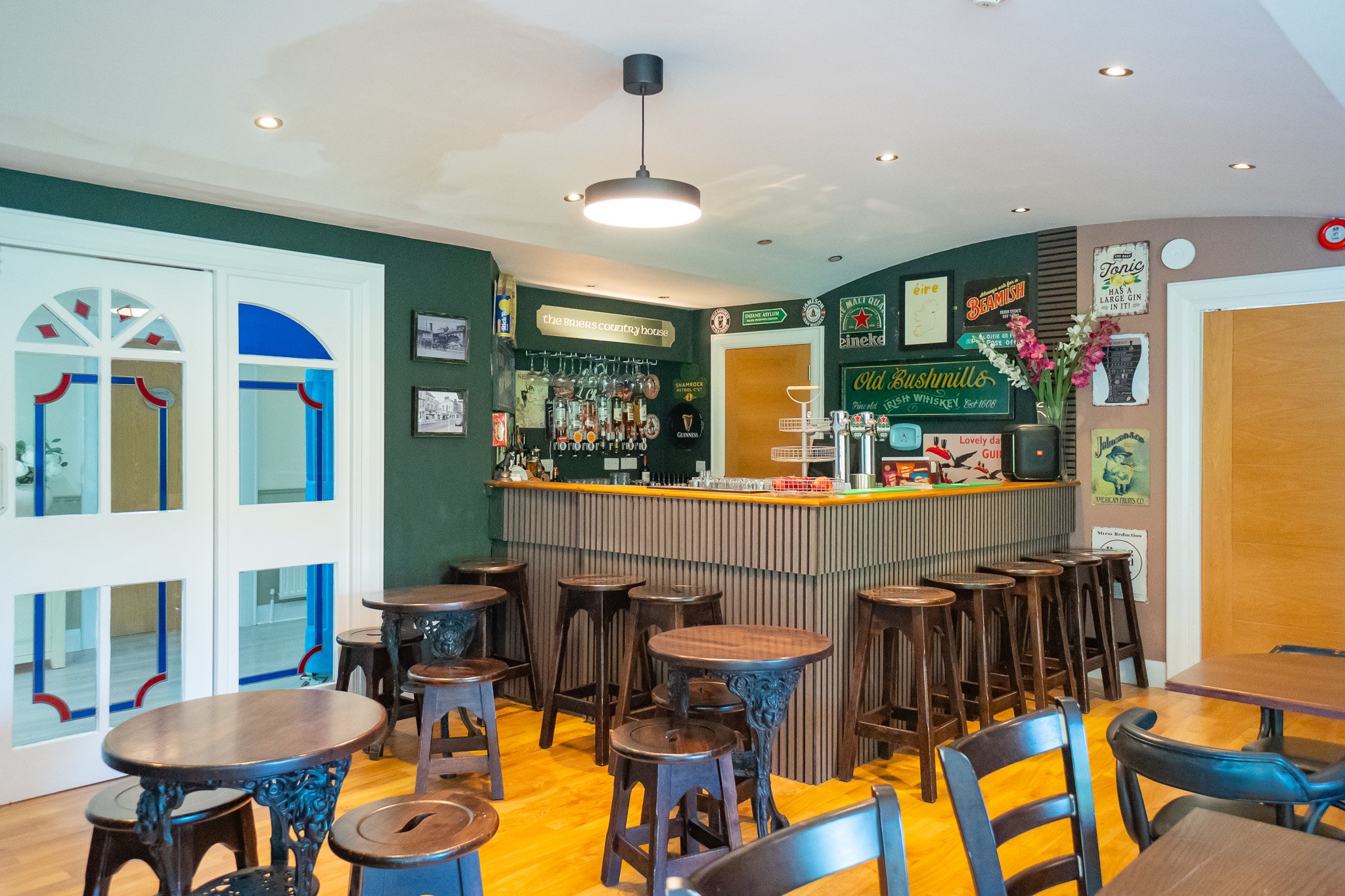
Nine bedrooms, all en suite, sleeping up to twenty-two. A licensed bar you stock yourself, a snug with Netflix and Sky open to every guest, and two hot tubs and a barrel sauna in an acre of grounds for whole-house bookings.
Check-in is self service between 3pm and 8pm with your door code sent on the morning you arrive, which suits days that finish when the light does. Free parking with room for a minibus, and dogs at no charge. Single rooms from £89 a night Sunday to Thursday; whole house £800 midweek or £2,000 for a weekend.